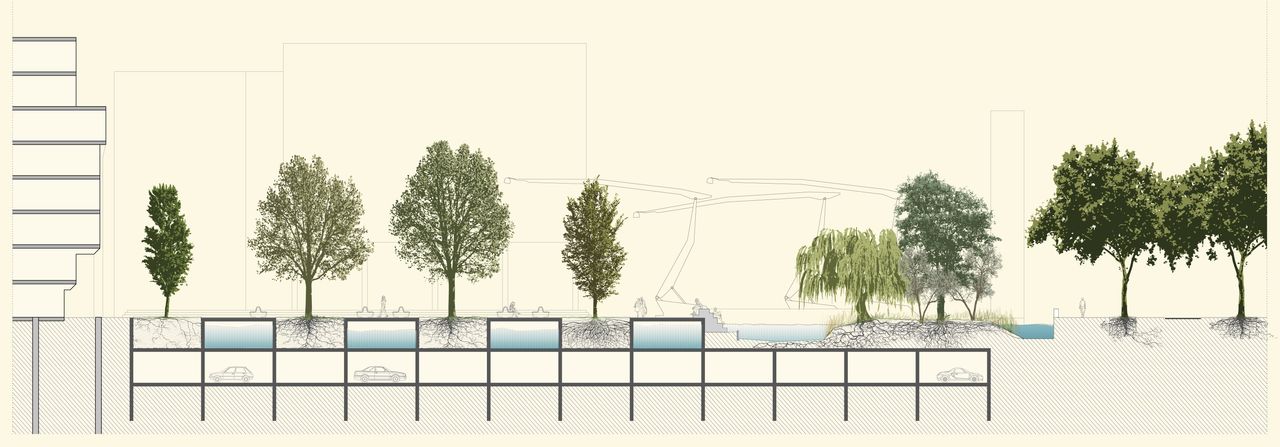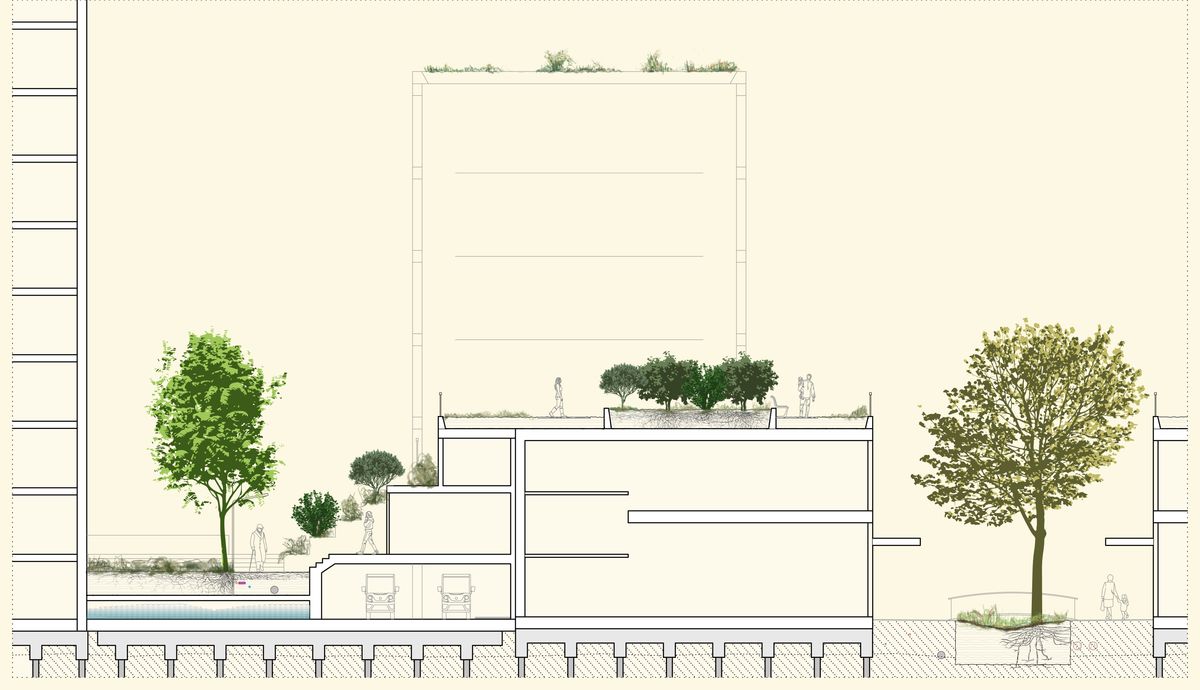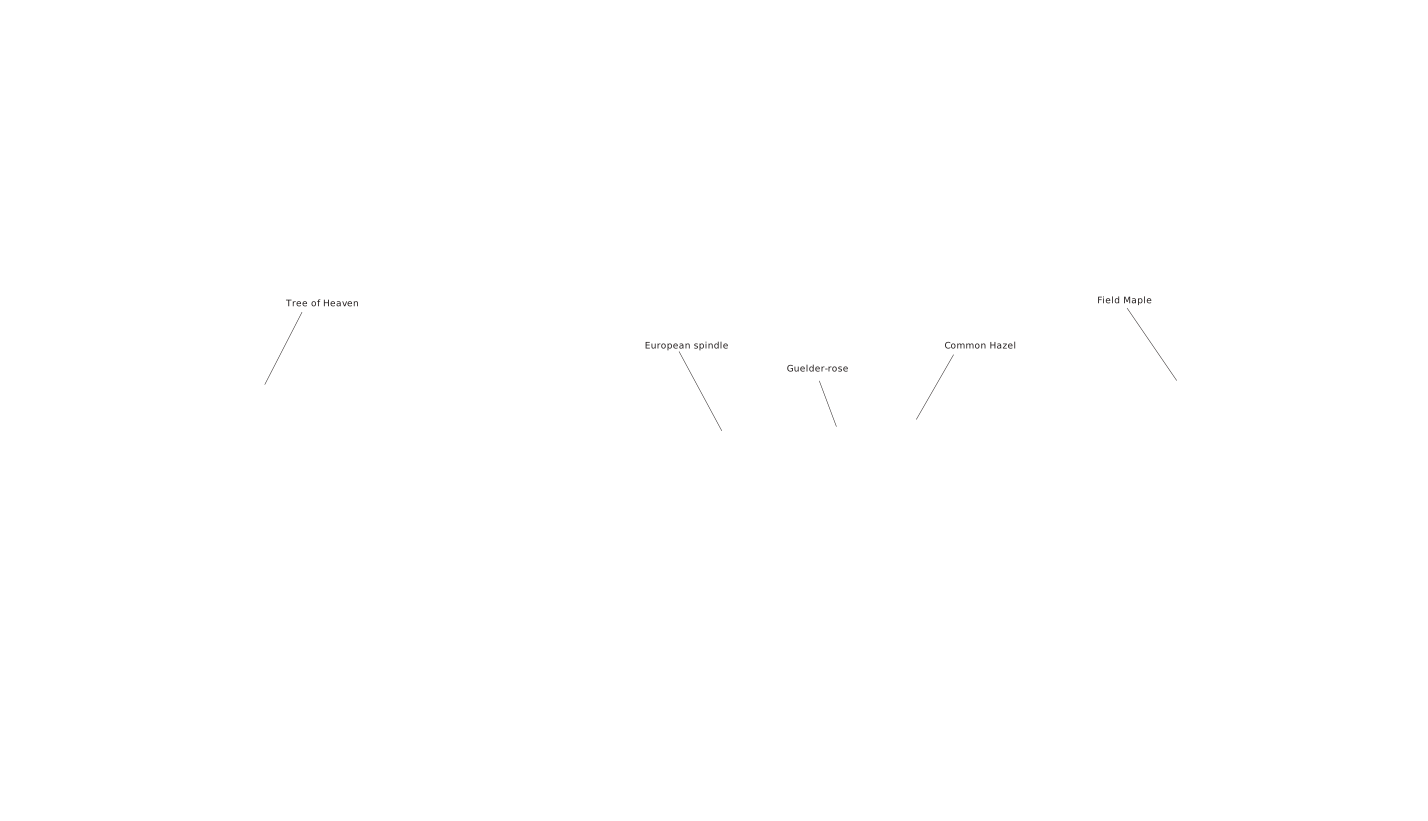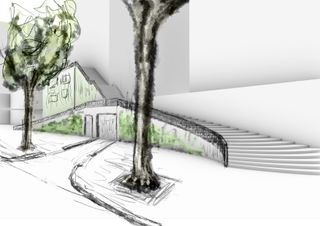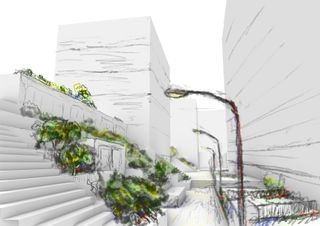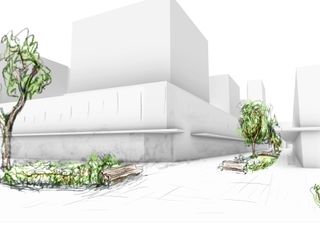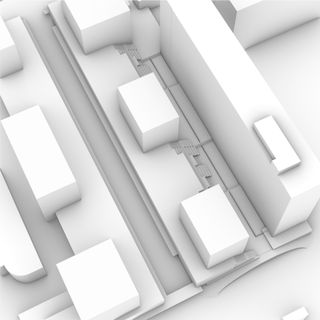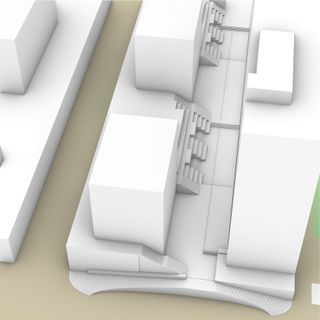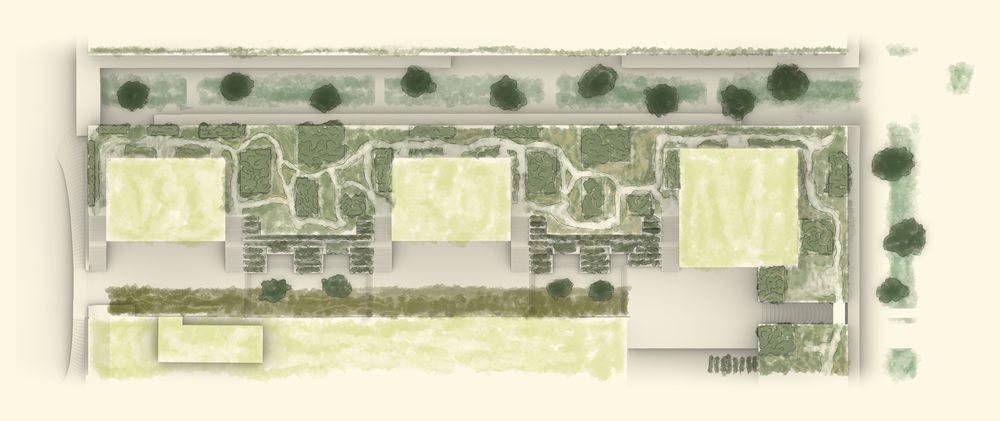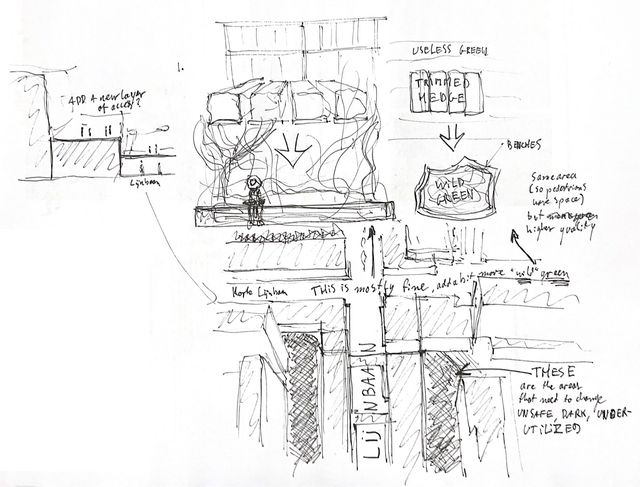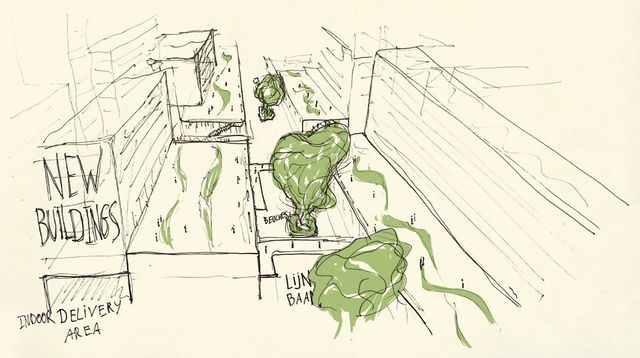
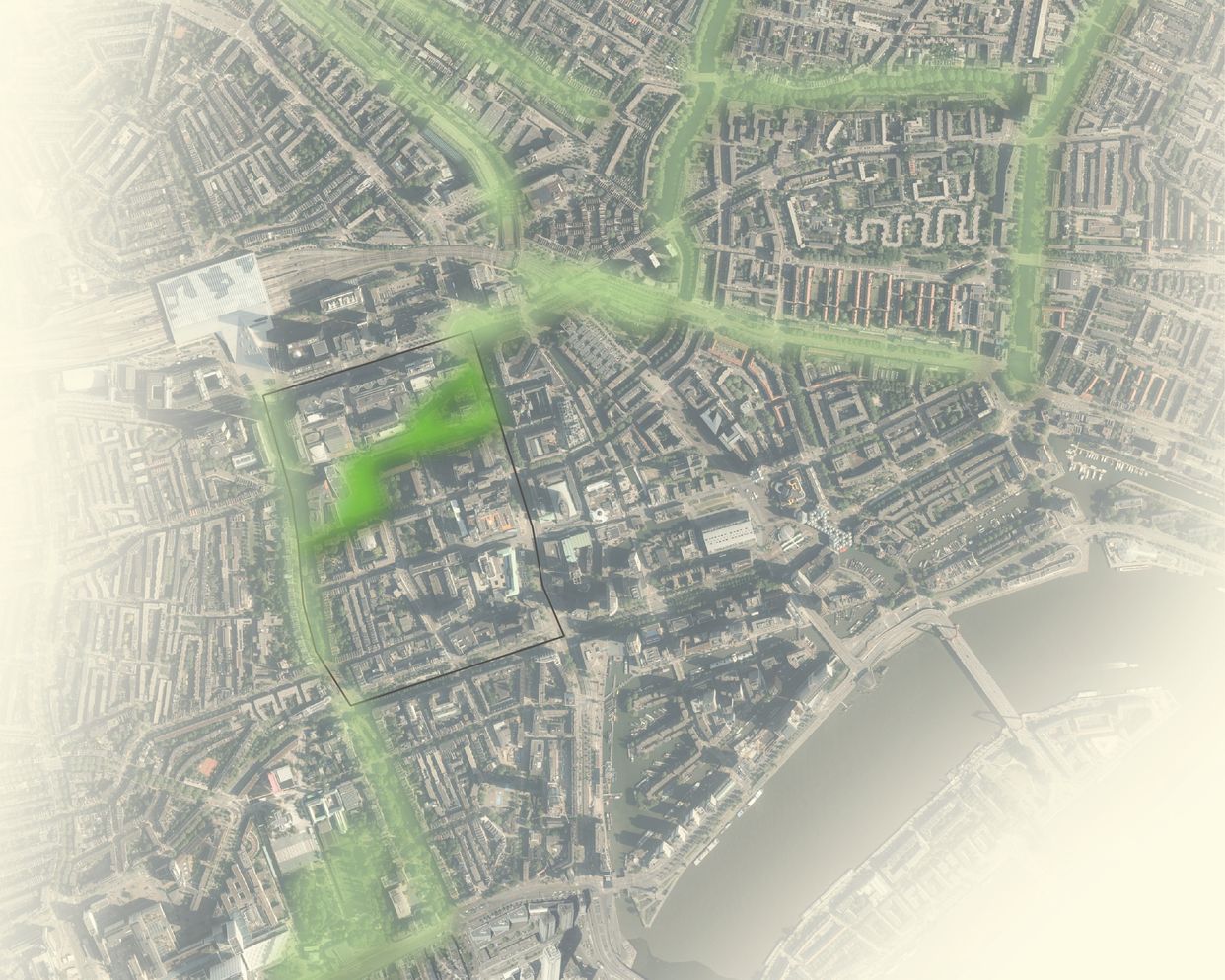
This redesign of the Lijnbaan area in Rotterdam was a project from the first year of the master Urbanism at TU Delft. I chose to focus on creating a new ecological connection, while also adding living space to the Lijnbaan area, and improving social safety.
The Lijnbaan area forms a missing link between the Westersingel on one side, and Hofplein on the other side (a roundabout at the time of this project, but with plans to transform it into a park connecting to the Hofbogen area). A green corridor between these places could have meaning on a larger scale for the ecological network.
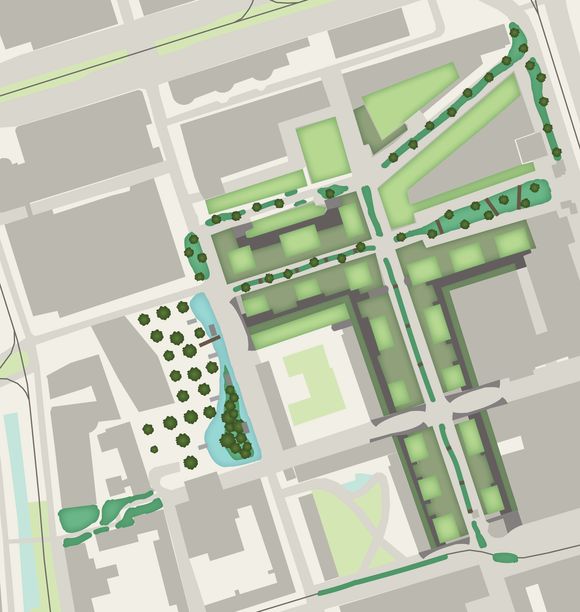
As the northern part of the area was identified as most impactful ecologically, the main focus of the plan was on Schouwburgplein and the Korte Lijnbaan.
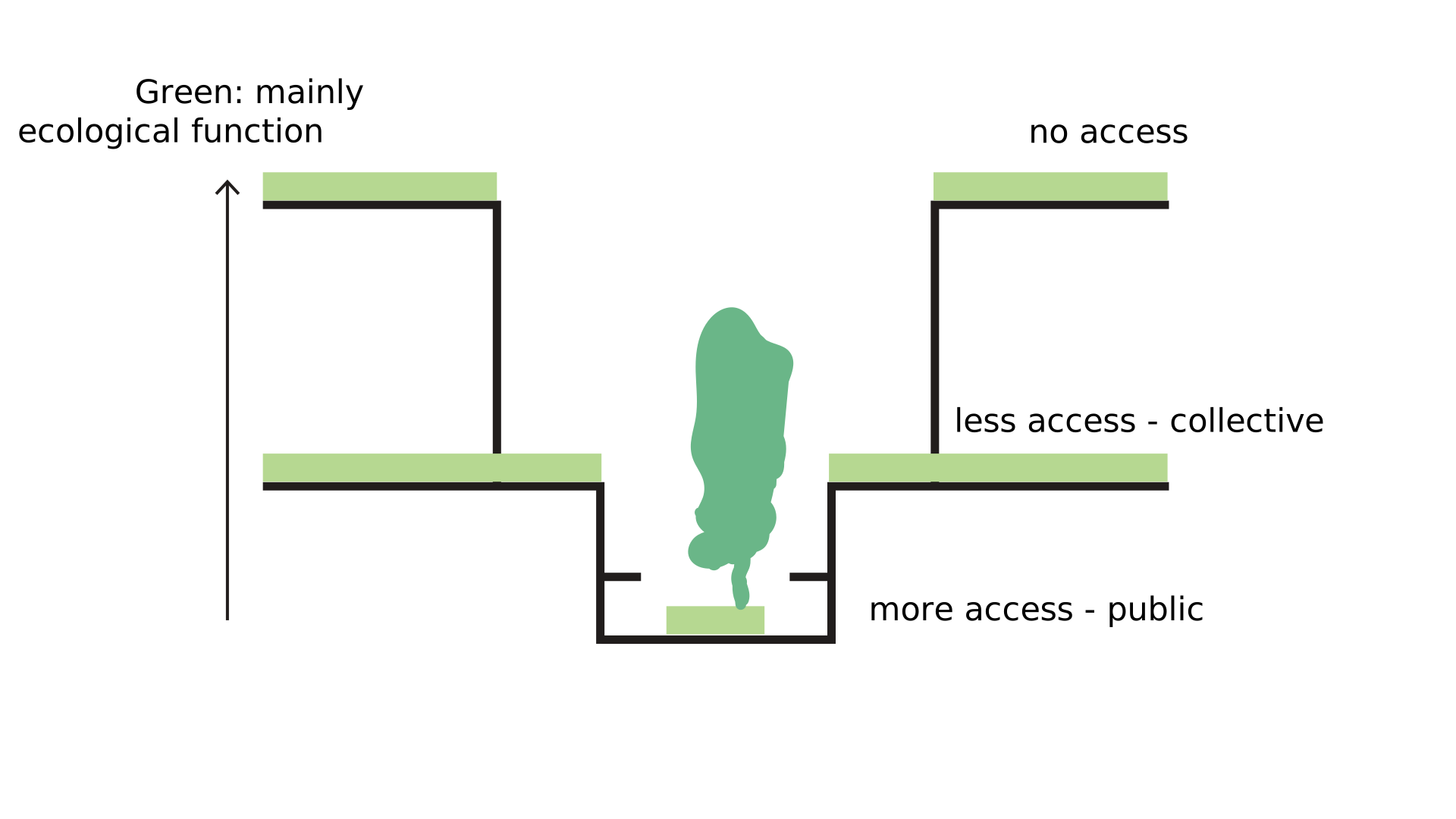
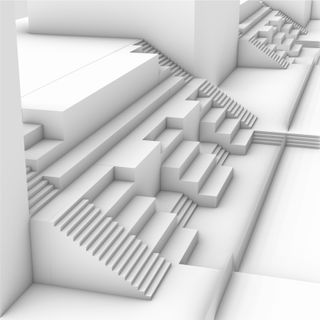
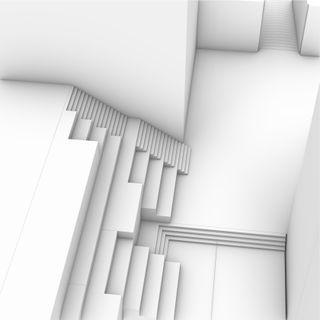
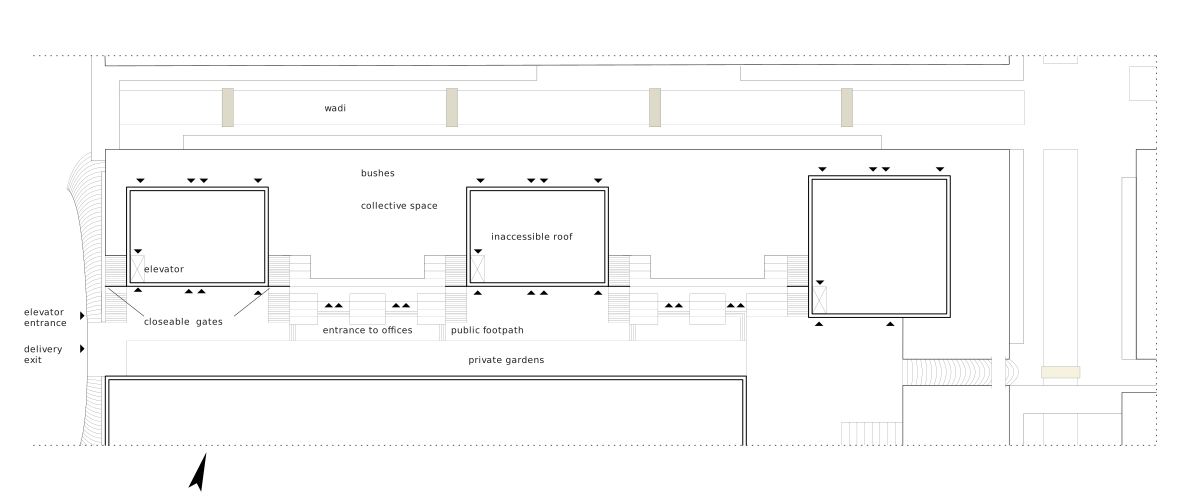
A key design principle was the separation of various layers of space with greenery with different functions. Where the ground level would be fully accessible by people - a relatively busy shopping street, a collective middle level would be less accessible for people, as it would only be used by inhabitants of adjacent houses. The roofs would be inaccessible to people. As access to people decreases in higher levels, ecological function of greenery increases.
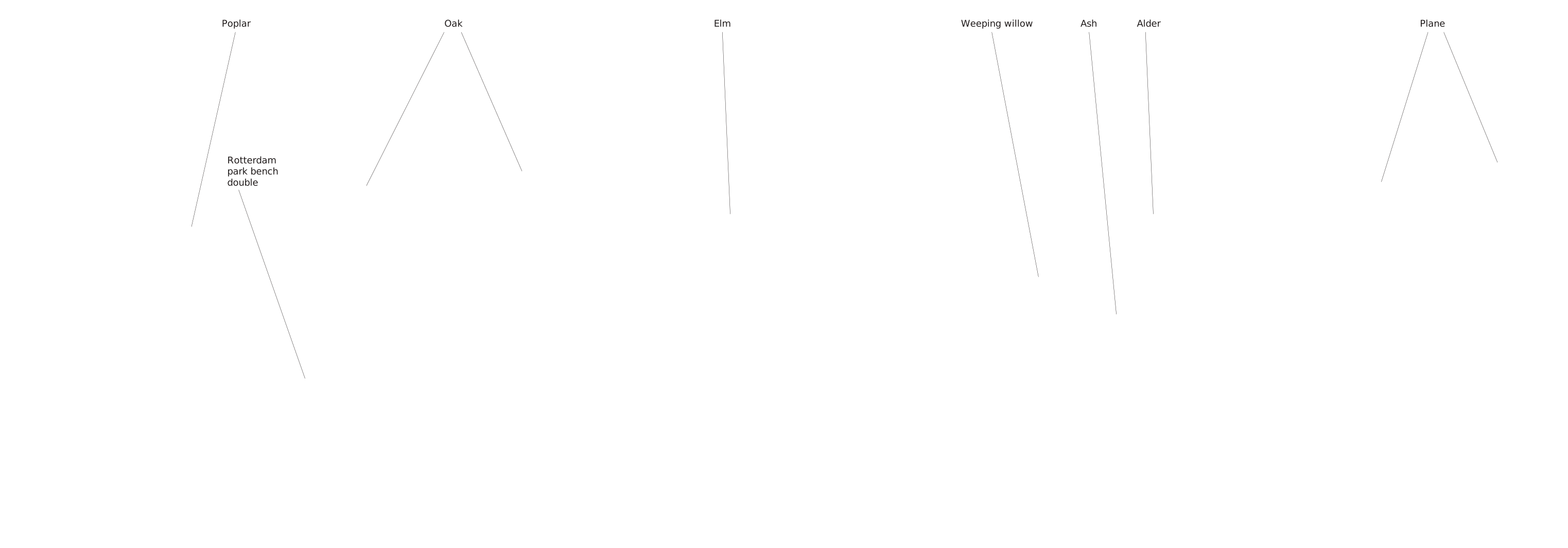
Several ecological typologies were identified, which support the target species of birds, bats and insects that can make use of the green stepping stones of the new ecological corridor. The chosen vegetation, all native species, was loosely inspired by various local landscapes, especially those types existing in South Holland, to support the target species in different ways.